
While Nvidia solidifies its global dominance in AI computing systems with its Rubin platform, four Chinese GPU companies (Moore Threads, Muxi, Biren Technology, and Tianshu Zhixin) are rapidly advancing through a series of IPOs and technological breakthroughs. This article will analyze the rapid progress of Chinese GPUs in computing performance and commercialization by comparing the flagship models of these companies with Nvidia’s H200 and Rubin GPUs in terms of key specifications and application scenarios. It will also objectively present an analysis of gaps in areas such as full-cycle ecosystem, supply chain, and energy efficiency, thereby exploring the key question: can Chinese GPUs truly break Nvidia’s monopoly and achieve market substitution globally?
Are Chinese graphics cards catching up with their competitors? Are they truly replacing Nvidia?
When the US approved the export of Nvidia H200 chips to China, the global tech community focused on one question: can Chinese GPU companies maintain their position in this computing power race? Over the past year, four Chinese companies — Moore Threads, Muxi, Biren Technology, and Tianshu Zhixin — have sparked an IPO wave, leading to sharp stock price increases and investor enthusiasm fueled by their rapid technological breakthroughs. These companies, nicknamed the “Four Little Dragons of Chinese GPUs”, are trying to challenge Nvidia’s long-standing dominance. Let us, as observers from Russia, examine the true strength of Chinese GPUs by comparing their flagship products.
I. Comparative analysis of flagship models: parameter gaps are narrowing, and scenario adaptation is a key advantage.
Nvidia is already clearly ahead with its H200 chip and the latest Rubin platform. The Rubin platform features two GPU cores delivering 3.6 exaflops of performance for FP4 inference tasks, and HBM4 memory with bandwidth up to 13 TB/s. This reduces the cost of large-scale AI inference by 10 times, making it the preferred choice for high-performance intelligent computing centers worldwide. Meanwhile, the flagship products of Chinese companies are striving to catch up to Nvidia on these key metrics.
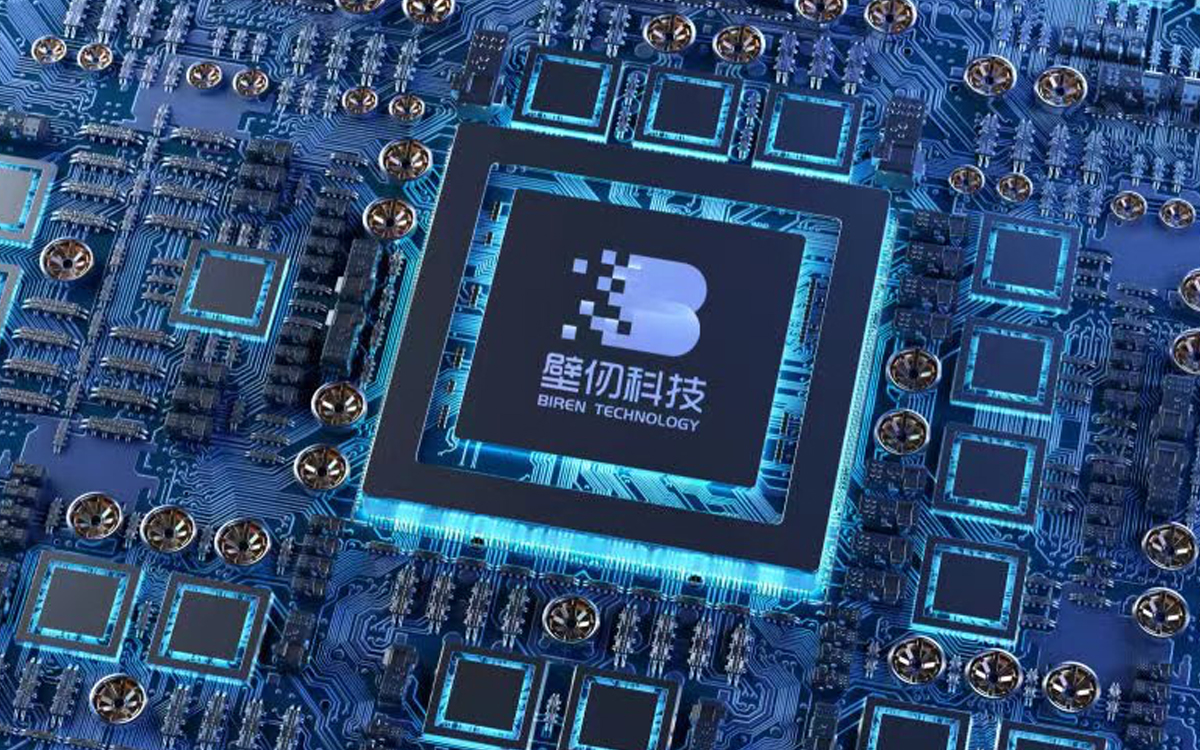
· Biren Technology’s BR100 chip, using Chiplet heterogeneous integration technology, directly competes in performance with the Nvidia A100/H100. It is applied in key scenarios such as government cloud services and intelligent computing centers, and has demonstrated comparable computing power in some AI training tasks.
· Moore Threads’ MTT S4000 is the world’s first full-featured GPU with GDDR7 memory support. It features 48 GB of memory, supports full precision from FP4 to FP64, and delivers 240 TFLOPS of AI computing power. In less complex compute-intensive tasks such as DeepSeek, its energy efficiency reaches 83% that of the Nvidia A100.
· Tianshu Zhixin has achieved mass production of 7nm GPGPUs, and its products are compatible with major AI platforms. They are widely used in industries such as financial risk management and industrial inspection.
· Huawei’s Ascend 910B Pro uses a 7nm+ process and delivers 1200 TFLOPS of FP16 computing power. It supports multi-chip interconnection, and the corresponding Atlas 950 SuperPoD cluster allows up to 8,192 chips to be connected, providing a total computing power of 8 EFLOPS, capable of training trillion-parameter large models.
Even more noteworthy is its cost-effectiveness: the Moore Threads MTT S4000 is priced at only $299, half that of comparable Nvidia products, while the implementation cost of Huawei’s Ascend series in government, energy, and other sectors is approximately 30% lower than Nvidia solutions. For Russian companies seeking to reduce costs, this is undoubtedly a very attractive option.
II. Current state of development: capital influence and technological breakthroughs, but weaknesses remain evident.
The rise of Chinese GPU companies is no accident. It is forecast that by 2025, the global GPU market size will exceed $350 billion, with China accounting for nearly 40% of that. This huge market demand has created fertile ground for technological advancement. In terms of capital, on their first trading day, Moore Threads’ stock rose 468.8%, while Muxi’s stock rose even more dramatically, by 692.95%. Sufficient funding allows companies to continuously invest in R&D — the development cost of a single high-performance GPU typically exceeds 1 billion yuan, and this level of investment is already paying off.
Commercially, Chinese GPUs have moved from the laboratory to practical application: Baidu AI Cloud has launched a ten-thousand-card cluster based on Kunlun chips; Muxi Technology has jointly established an intelligent computing joint laboratory with research institutes; and Huawei Ascend has signed over $5 billion in overseas orders, becoming part of the autonomous driving computing platforms of European automakers. These developments demonstrate that Chinese GPUs are no longer merely “theoretical” but have practical value.
However, upon closer inspection, it becomes clear that the gap still exists. The biggest weakness lies in the ecosystem: Nvidia’s CUDA ecosystem covers more than 90% of AI frameworks, and its community of millions of open-source developers forms an insurmountable barrier. In contrast, Chinese companies’ software stacks operate independently, leading to high adaptation costs for developers. Second, there is the issue of system-level interoperability. The Rubin platform provides end-to-end optimization from chip to architecture, software, and ecosystem, while Chinese GPU breakthroughs are still focused on individual technologies, with significant gaps still existing in areas such as high-speed interconnection protocols and large-scale cluster scheduling. Furthermore, advanced manufacturing processes and high-tech packaging depend on external supply chains. Key resources such as 3nm/4nm processes and HBM4 memory are still monopolized by international companies, which also creates potential risks.
III. Replacing Nvidia? Unrealistic in the short term, but potential cannot be ruled out in the long term.
Returning to the main question: can Chinese GPUs truly replace Nvidia? From the perspective of the Russian market, the answer is “gradual replacement” rather than “complete replacement.”
In the short term, Nvidia’s position in key scenarios such as high-performance AI training and large-scale computing is unlikely to be shaken. The Rubin platform is already being used by major cloud providers such as AWS and Microsoft, and its advantages in energy efficiency and cost control are currently unmatched by Chinese GPUs. For Russian tech giants that need to process ultra-large models, Nvidia remains the most reliable choice.
However, in the long term, the growing popularity of Chinese graphics cards is changing the market landscape.
On the one hand, in vertical scenarios such as government, finance, and industry, the cost-effectiveness and local compatibility advantages of Chinese GPUs are becoming increasingly evident. These scenarios are relatively less dependent on the ecosystem and focus more on practical results and cost control, making them suitable for the digital transformation of small and medium-sized tech companies and traditional industries in Russia. On the other hand, global demand for computing power is becoming more diverse. The development of ASIC chips and in-memory computing technology means that the market is no longer dominated solely by Nvidia. The entry of Chinese companies into these new areas could allow them to achieve a “leapfrog development.”
What’s more, Chinese companies are making every effort to address their ecosystem shortcomings. Huawei has launched a $1 billion overseas Ascend ecosystem expansion plan, attracting 500,000 overseas developers; open-source components developed by Moore Threads are facilitating adaptation by developers worldwide. As ecosystem barriers gradually weaken, cost-effectiveness and scenario-specific adaptability will become key competitive advantages, and that is where the potential for Chinese GPUs lies.
Conclusion
The development speed of China’s GPU industry is astonishing. From technological progress to commercialization, they have achieved in just a few years what took Western companies more than a decade. However, “replacing Nvidia” is not a goal that can be achieved overnight, but a marathon requiring long-term accumulation of technology, capital, and ecosystem. For Russian companies and investors, Chinese GPUs are not an “either/or” choice, but an important component of diversified computing power, and especially in areas focused on cost-effectiveness and scenario-based solutions, they have already demonstrated sufficient competitiveness.
In the coming years, as the ecosystem improves and the supply chain matures, Chinese GPUs are expected to make breakthroughs in an increasing number of niche markets. This computing power race has no end, and the entry of Chinese companies into the global GPU market is making it more diverse and dynamic. Let us watch and see whether these Eastern competitors can truly change the global computing power landscape.