

After visiting CES 2026, I couldn’t take it anymore — AI products are becoming more and more absurd
CES takes place in Las Vegas, USA, from January 6 to 9, lasting just four days. Among the CES Innovation Award winners from Shenzhen are the Maono DM40 wireless microphone, the Turing AI keyboard, a waterborne aerial photography drone, and the Kamingo conversion system that turns a regular bicycle into an electric bike with 750W of power in 10 seconds, among others. Additionally, numerous absurd inventions were showcased: from birth to old age, from the bedroom to the bathroom — practically every aspect of life is now under AI control.
Over these days, we have walked through almost all the exhibition halls and prepared for you a review of these interesting or absurd products — take a look and see if there are any you would want to take home.
AI companions have moved beyond the smartphone screen into the real world
AI companions have been popular recently, but successful solutions are few — mostly consisting of conversations via smartphone with a customizable character on the screen capable of simple interactions. This time, things are different: some have embedded AI into a holographic projection, while others have created an AI electronic pet that actually grows day by day. If you prefer practical companionship, there is a dedicated AI feeder for household cats — even cats are now “dressed up” with Apple Watch-like devices.
Razer has unveiled the 3D holographic AI assistant Project AVA, which uses a physical device to allow various AI characters to appear as holographic projections. Five selectable roles are currently available, including anime-style characters and anthropomorphic designs, supporting voice perception and contextual interaction. Initially, Project AVA was developed as an AI coach for esports — it can analyze the game screen and provide advice. Now, the company wants it to offer assistance across all areas of life, becoming a universal AI assistant for the desktop and continuing to accompany the user around the clock.
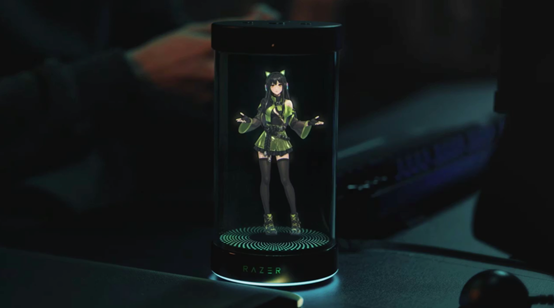
Although Razer emphasizes that Project AVA is not intended for romantic relationships, against the backdrop of a growing AI companion market, using it solely as an efficient tool for work or games seems strange — it would be much more convenient to summon a smart speaker like Xiaoai Tongxue or Siri. The 3D holographic design is clearly aimed at fostering dependence. In the AI companionship market, especially in Japan and other regions, AI companions are already beginning to transition from digital interfaces to 3D physical devices.

Perhaps this is the new trend in AI companionship this year: a device the size of a small figurine that can be carried in a pocket, with holographic projection technology capable of displaying any AI-generated character. Previously, the popular Grok platform for AI companionship, featuring anime-style characters, a mischievous boy named Rubi, and a muscular gentleman in the image of the protagonist from “Fifty Shades of Grey”, attracted many users.
Currently, Project AVA runs on the Grok platform — it’s like inviting an anime girl from your smartphone screen into your home. Musk would probably want to buy such a device to place his beloved Ani by his bedside. However, some users note: the product is indeed cool, but after the novelty wears off, what’s the point of it? Besides, having a cute device collect your data makes no sense, does it? Razer is currently taking pre-orders for the product at $20, with official shipping set to begin in the second half of 2026.
An AI feeder that understands your cat better than you do
AI is beginning to penetrate not only the boundaries of human life but also pet health. Swiss startup AI Tails unveiled a new feeder at CES 2026 that uses a camera to analyze cats’ facial expressions and helps diagnose their illnesses.

Using information captured by the camera, the device can analyze the amount of food eaten, water consumed, body temperature, and facial expressions of cats, identify potential health issues, and provide cloud-based data analysis and in-app notifications. Founder Angelica De Riggi said the inspiration for the product came from a personal experience — the loss of her beloved cat. Her goal is to provide pets with health monitoring similar to what humans use with smart wearable devices.
Currently, the product is designed only for cats, with a version for dogs still in development. Buying such a device for a pet sounds good, but the price may not please you: it is offered in two versions at $199 and $299 — one with a temperature sensor, one without, a $100 difference? Besides the product cost, there are AI service fees for data analysis: the app is free for the first six months, then requires a subscription of approximately $21 per month. This AI feeder with water is scheduled for global shipping at the end of 2026 — are you interested?
AI pocket pet that never gets sick
If that still seems troublesome to you, startup Takway, aiming to become the “Nintendo of the AI robot era”, has introduced an electronic pet called Sweekar that never gets sick.
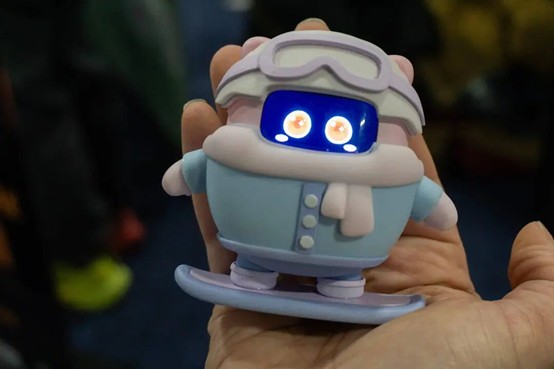
This is a virtual pet similar to a Tamagotchi, palm-sized — an ultra-cute egg-shaped toy. Additionally, it has ears, a screen for a face, and inside its body is a more complex AI chip than that of a Tamagotchi.
Its growth process is also very ritualistic: when purchased, it is a small egg that needs to be “baked” for two days; then comes the infancy period, the adolescence period — the user must take care of it, feed it, play with it, etc.; in the adult period, it becomes more independent, even able to explore the virtual world on its own and return with reports of its adventures.
Most importantly, it does not die — at least, virtual “death” is gone forever. At level 51, even if you are very busy, Sweekar can survive on its own, though of course it needs to be charged. Sweekar is offered in three basic colors — pink, yellow, and blue — and users can purchase various cases and accessories. The specific price has not yet been determined, with an expected cost of $100-150, and a Kickstarter crowdfunding campaign will begin soon.
Cocomo is a robot pet that can follow its owner, resembling a fluffy egg or teddy bear, with imitation and learning capabilities, and it strengthens emotional connection with the owner through various tactile sensations (e.g., temperature regulation). | Image source: Engadget
AI pets have also become a hit at CES this year. In addition to Sweekar, Japanese startup Ludens AI introduced two very cute AI robot companions — Cocomo and Inu. Both robots have emotional connection as a key feature, emphasizing the companionship attribute, can interact with the owner through simple body movements, sound imitation, etc., and can learn user preferences.
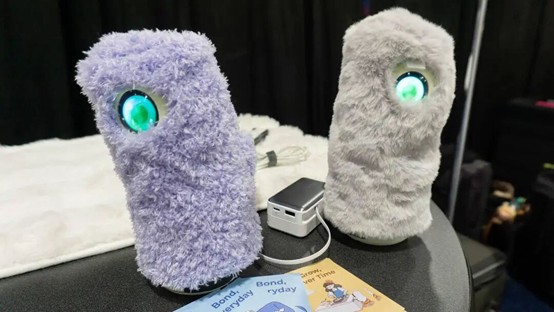
Inu is a miniature desktop robot known as a “desktop alien creature”, interacting with the user through sounds and movements, with the main design goal being companionship during work. | Image source: Engadget
Joy for Lego fans — the launch of smart bricks with chips
Lego has introduced brand new “smart bricks”, which are called the most important evolutionary step for the product in 50 years.
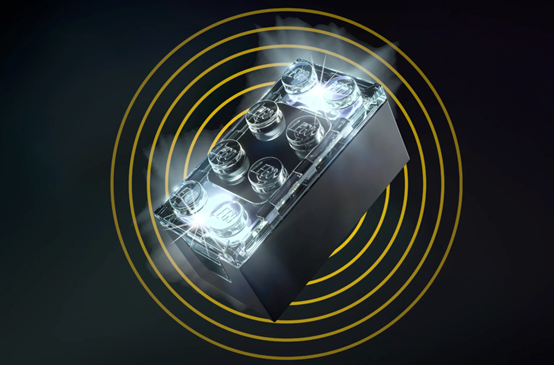
Although the bricks are equipped with chips, Lego states that they have no AI functions, no cameras, and do not record data. The micro-machines embedded in the smart bricks support NFC, Bluetooth mesh networks, various sensors, and wireless charging, and can interact with smart tags, smart figures, etc., to achieve interactive functions, giving traditional Lego dynamic effects including sounds, lights, music, etc. The first products are Star Wars themed sets, priced from $70 to $160, with shipping beginning March 1st. The sets include smart bricks and smart tags. Lego stated that smart bricks are a long-term strategy, not limited to the current Star Wars series, and may expand to other IPs such as Pokemon in the future.
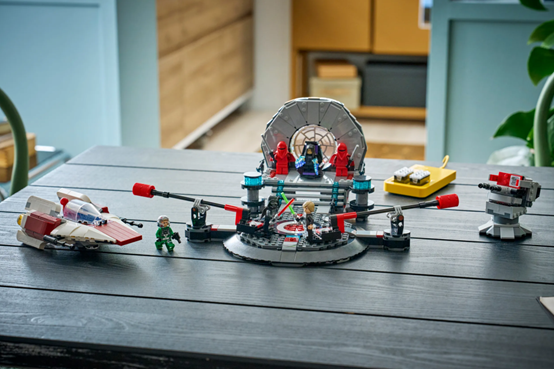
From top to bottom: Darth Vader’s TIE Fighter set with 473 pieces, includes one smart brick, one smart tag, and one smart figure. ($70) | Red Five X-wing Fighter set contains 584 pieces, including one smart brick, five smart tags, and two smart figures. ($100) | Darth Vader’s Throne Room Duel set with 962 pieces and the A-wing Fighter set include two smart bricks, three smart figures, and five smart tags. ($160)
Users have mostly given positive feedback on Lego’s smart bricks. Although outwardly Lego’s smart bricks have only gained the ability to produce sounds compared to traditional ones, they believe these sounds are sufficient to stimulate children’s imagination, and combined with the use of smart tags, they offer more ways to interact.
After invading emotions — the next step is every aspect of our lives
Here is a jacket that can function as an AI terminal — wearing it makes you the most stylish person on the street; as well as various AI devices for haircuts, “watching you bathe”, “watching you use the toilet”, etc.
Wear this jacket and you become a walking AI
If one day your clothing could charge your gadgets for you, regulate temperature, and even work with AI — would you still need AI smartwatches/smart glasses? ModeX, a smart jacket presented at CES, wants to combine all of this at once.
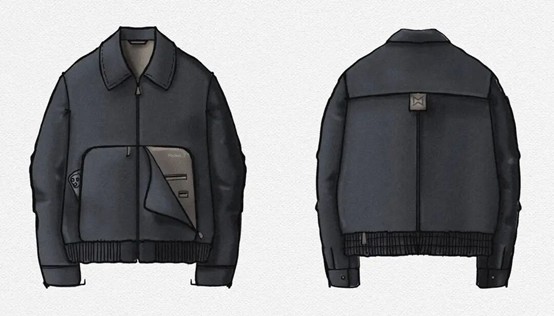
This is ordinary clothing, but through special tailoring and connections, it transforms into a modular smart jacket designed specifically for young urban professionals. The main functions of this modular jacket include wireless charging, wearable edge computing devices, intelligent temperature regulation, and programmable lights. The most important feature is the thin, foldable power management and computing modules that can be invisibly embedded into the garment.
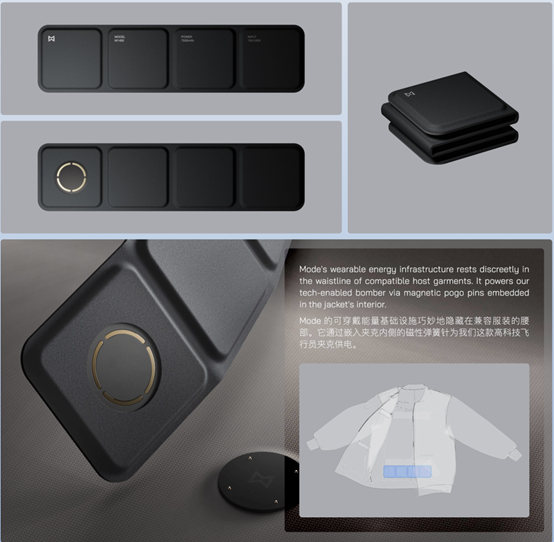
Thus, this jacket “integrates” all functions. The developer company says its goal is to redefine mobile computing and ways of interacting with energy, striving to create a fusion of technology and fashion. And this jacket is precisely such a fusion: all terminal AI computing can happen within it, wherever you are, that’s where the AI computing takes place.
AI haircut: become Leonardo DiCaprio in ten minutes
When you get a haircut at a salon, have you ever asked your stylist whether they can cut and style their own hair? In most cases, they answer that cutting your own hair is very difficult. But at CES this year, someone introduced an AI haircutter that allows you to cut your own hair. Anytime, anywhere — open the app, put on a headband, and anyone can start cutting their hair with the clipper.
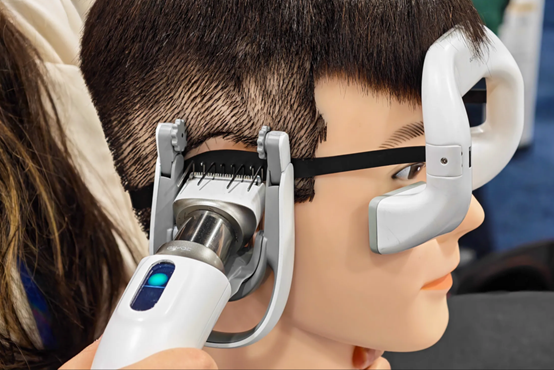
Unlike those devices you see online — where you stick your head in and get shaved bald in two or three seconds, the smart haircutter Glyde is equipped with an AI navigation system for haircutting and an automatic gradient cutting function — just put on an ordinary headband and you instantly become a stylist.

On the official Glyde website, product details and specific usage steps are presented: open the app, select a hairstyle you like, then put on the special headband and start cutting your hair.
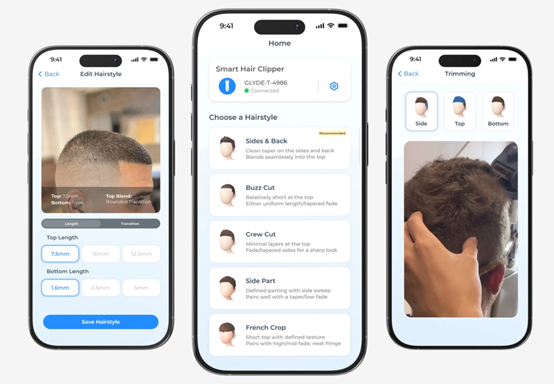
The developers note that Glyde’s smart blades can sense the speed, direction, and angle of the cut, adjusting them in real time to prevent uneven layers or over-cutting. If the speed is too high, the blades automatically retract. If the angle direction is wrong, the amount of hair cut is reduced.
AI bathing: bathe your way to beautiful skin and a good mood
After AI haircuts, now there is also AI bathing; what’s even more incredible is that this device won the CES 2026 Beauty Innovation Award.

The device, called the Balance AI Hydrofiltration Skin System, is actually a smart shower mirror installed directly in the shower stall. Using near-infrared laser and spectral sensors, it transforms the showering process into a precise cosmetic treatment. Specifically, there are no cameras in the device — only these sensors that scan the user’s face and body, assessing skin elasticity, oil levels, pigmentation, and hydration needs, among other parameters. Based on the AI analysis results, the system adjusts the pH of the shower water in real time through electrolysis, and dispenses various vitamins and active cosmetic ingredients via NFC-tagged capsules, further personalizing the shower water flow. The system’s display also records changes in skin condition, making the device especially suitable for people with acne-prone or sensitive skin.
In addition to AI bathing, the South Korean company Ceragem, the developer of Balance AI, also presented at CES an AI beauty system that integrates dozens of beauty salon treatments into a personal AI multi-functional energy restoration device.
The pursuit of beauty is human nature. Although L’Oréal does not focus on AI, the company also presented a rather absurd LED mask at CES this year, which uses phototherapy of a specific wavelength to enhance the absorption of skincare products.

An LED mask sounds like a “stupidity tax”. L’Oréal’s new LED mask’s main advantage is “wearability”: thanks to flexible materials and a design that fits tightly against the skin, it solves the discomfort issue of traditional masks.
The product idea arose from sheet masks: combining red light and near-infrared phototherapy with daily skincare reduces usage time and potentially improves product absorption efficiency.
AI toilet: we can analyze any data
AI has fully mastered the items in the bathroom. Unlike AI bathing, this AI toilet openly states that it collects data using a camera for analysis.

It’s called Throne, and it uses computer vision technology to study the user’s feces. Using a camera and microphone, it monitors the frequency of urination and defecation, as well as the texture, size, and quantity of feces, to analyze intestinal health. The developers of Throne also say that collecting this data is crucial for monitoring disease symptoms during medication. At the same time, they note that the collected data is encrypted and protected, and the AI analysis results are sent to the user’s device; it can track the “movements” of up to six people.
Currently, pre-orders for this AI toilet computer are open, priced at $340, plus a $6 per month subscription.
Equally striking is that another company also presented an AI toilet, which additionally features a screen on the wall. The urine analysis sensor built into the toilet has real-time monitoring capabilities, and after analysis, the results are displayed directly on this wall-mounted screen. If the user has not used the toilet for 8-10 hours, the system automatically sends an alert to the phones of registered family members.
Turn off the light — AI won’t be able to analyze any data
If there are cameras installed everywhere for AI analysis of your SNP, there are also specialized devices that render cameras inoperable and prevent data processing by AI.
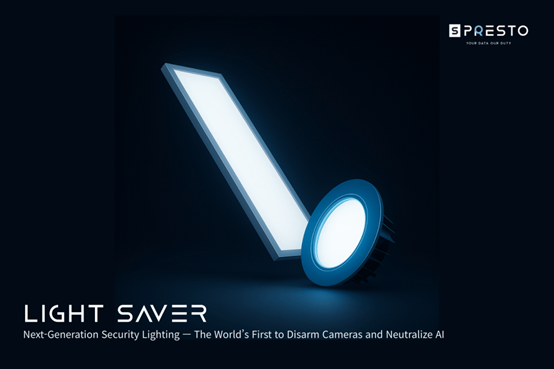
Light Saver is exactly such a device — the world’s first “anti-AI” lighting security system. To human vision, Light Saver is just ordinary light, but to machine vision, it becomes an insurmountable barrier.
The working principle of this lamp is that it uses special optical frequencies to create strong visual interference in images captured by cameras, completely rendering covert video and recording information worthless.
Moreover, it can physically interfere with computer vision algorithms, preventing AI from detecting or recognizing people and objects in a scene. For some sensitive locations, disabling AI may become a necessary safety right. The existence of this lamp is an innovative countermeasure.
This year’s CES officially ends tomorrow. Vendors bring their proudest products here, but no one knows how many orders they will actually receive.
However, it can be predicted that last year was the year of Agents, and the capabilities of large models were limited to smartphones; this year may only just be the beginning of the fusion of AI and physical hardware. Have you found any particularly interesting products at CES this year? Feel free to leave your comments.